



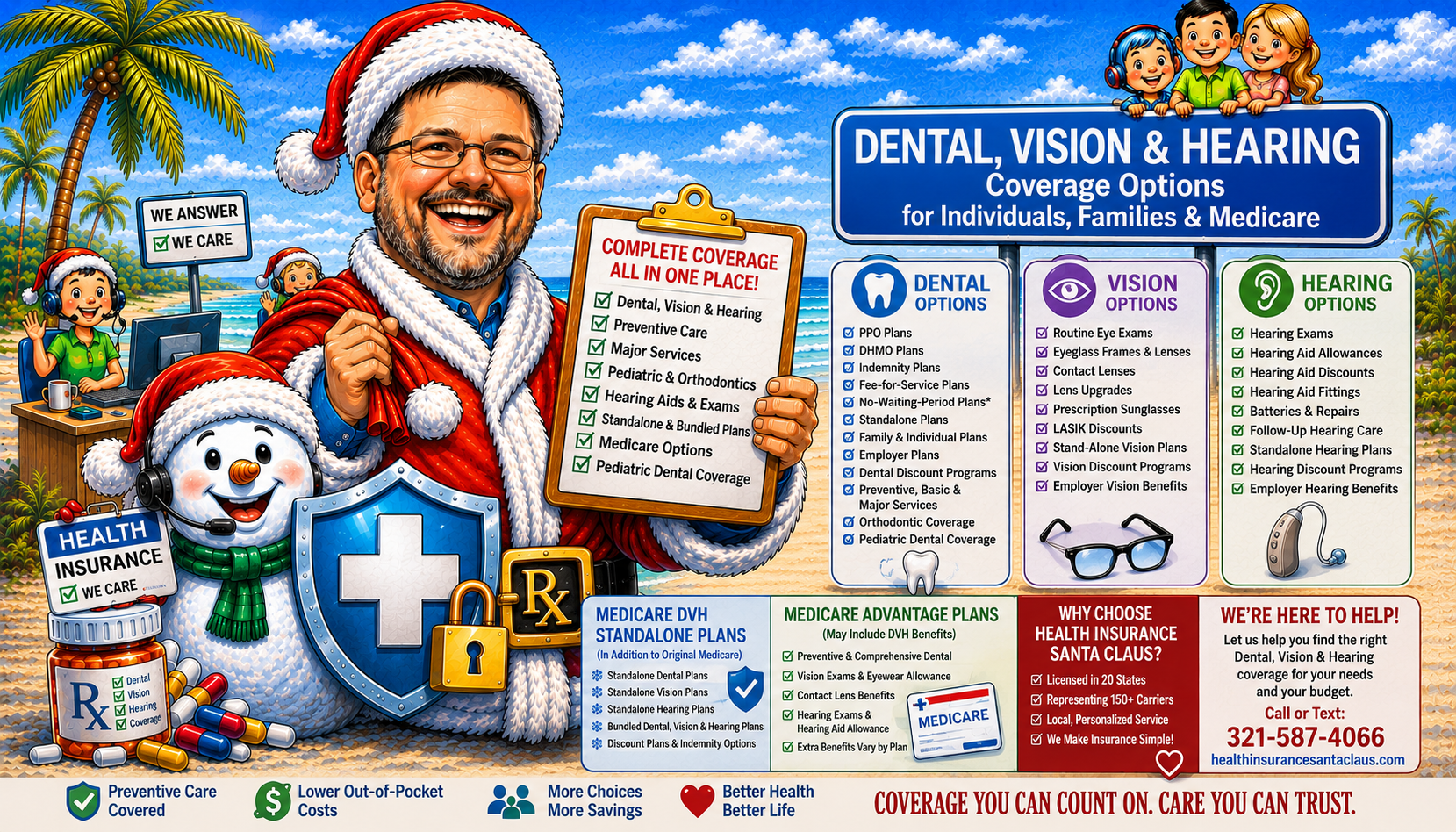
Dental, Vision & Hearing Insurance Options
Protect Your Smile, Your Sight, and Your Hearing
Medical insurance is essential, but many plans do not include routine dental, vision, or hearing care. Separate Dental, Vision, and Hearing (DVH) coverage can help reduce out-of-pocket costs for preventive care, restorative services, eyewear, and hearing-related expenses.
Whether you're under age 65 or enrolled in Medicare, there are multiple coverage options to consider.
Dental Insurance Options for Individuals Under Age 65
Individual Dental Insurance
Individual dental plans are purchased directly by consumers and are designed for adults who do not receive dental benefits through an employer.
Family Dental Insurance
Family plans combine coverage for eligible household members and may include pediatric dental services along with adult preventive and restorative care.
Employer-Sponsored Dental Plans
Many employers offer dental insurance as part of an employee benefits package. Coverage and cost-sharing vary by employer and plan.
Dental PPO Plans
PPO plans generally allow members to use participating dentists while often providing the option to receive care outside the network at a different cost.
Dental HMO (DHMO) Plans
DHMO plans generally require members to select a primary dentist and receive services through participating providers.
Dental Indemnity Plans
Dental indemnity plans, sometimes referred to as traditional dental insurance, generally provide greater flexibility in choosing a dentist. These plans often reimburse a percentage of covered expenses after any applicable deductible, subject to plan terms and annual maximums.
Fee-for-Service Dental Plans
Fee-for-service plans reimburse covered dental expenses according to the policy's terms and may allow members to visit any licensed dentist.
Stand-Alone Dental Insurance
Stand-alone dental plans are purchased separately from medical insurance and are commonly used when health coverage does not include adult dental benefits.
Dental Discount Programs
Dental discount programs are not insurance. Members pay a membership fee in exchange for negotiated discounts from participating dental providers.
No-Waiting-Period Dental Plans
Some dental plans may offer immediate access to certain preventive services or reduced waiting periods. Availability and covered services vary by plan.
Common Dental Services
Dental plans may help with:
-
Routine cleanings
-
Dental exams
-
Digital X-rays
-
Panoramic X-rays
-
Fluoride treatments
-
Sealants
-
Fillings
-
Root canals
-
Crowns
-
Bridges
-
Dentures
-
Partial dentures
-
Oral surgery
-
Tooth extractions
-
Emergency dental care
-
Periodontal (gum disease) treatment
-
Pediatric dental services
-
Orthodontic services (when included)
-
Dental implants (when covered by the plan)
Cosmetic Dentistry
Most dental insurance plans generally do not cover cosmetic procedures such as teeth whitening or veneers unless medically necessary under the plan's terms.
Understanding Dental Benefits
When comparing dental plans, review:
-
Monthly premium
-
Annual deductible
-
Annual maximum benefit
-
Waiting periods
-
Coinsurance
-
Network requirements
-
Preventive care coverage
-
Major service coverage
-
Orthodontic benefits
-
Implant coverage
-
Emergency treatment coverage
Vision Insurance Options
Stand-Alone Vision Insurance
Vision insurance can help reduce the cost of routine eye care and prescription eyewear.
Employer Vision Plans
Many employers offer vision benefits through workplace insurance programs.
Vision Discount Programs
Vision discount memberships provide reduced pricing on eye care services and eyewear through participating providers.
Common Vision Benefits
Vision plans may include:
-
Routine eye examinations
-
Refraction exams
-
Prescription glasses
-
Frames
-
Lenses
-
Progressive lenses
-
Contact lenses
-
Contact lens fitting
-
Lens coatings
-
Prescription sunglasses (when included)
-
Discounts on LASIK or other vision correction procedures (when available)
Hearing Coverage Options
Stand-Alone Hearing Plans
Some supplemental plans focus specifically on hearing-related services.
Hearing Discount Programs
Discount memberships may provide reduced pricing on hearing evaluations and hearing devices.
Employer Hearing Benefits
Some employer benefit packages include hearing-related coverage or discounts.
Common Hearing Benefits
Depending on the plan, benefits may include:
-
Hearing evaluations
-
Diagnostic hearing exams
-
Hearing aid fittings
-
Hearing aid allowances
-
Hearing aid discounts
-
Hearing aid batteries
-
Hearing aid repairs
-
Follow-up hearing care
Bundled Dental, Vision & Hearing Plans
Some policies combine Dental, Vision, and Hearing benefits into one convenient plan.
Bundled plans may include:
-
Preventive dental care
-
Routine eye exams
-
Eyewear allowances
-
Contact lens benefits
-
Hearing evaluations
-
Hearing aid discounts
Medicare Dental Coverage
Original Medicare generally does not cover most routine dental care.
Many beneficiaries explore:
-
Stand-alone dental insurance
-
Dental discount programs
-
Dental indemnity plans
-
Bundled Dental, Vision & Hearing plans
-
Medicare Advantage plans with dental benefits
Medicare Vision Coverage
Original Medicare generally does not cover routine vision care.
Additional options may include:
-
Stand-alone vision plans
-
Vision discount programs
-
Medicare Advantage plans with vision benefits
Medicare Hearing Coverage
Original Medicare generally does not cover hearing aids or routine hearing exams.
Many beneficiaries consider:
-
Stand-alone hearing plans
-
Hearing discount programs
-
Medicare Advantage plans with hearing benefits
Medicare Stand-Alone Dental, Vision & Hearing Plans
Many Medicare beneficiaries purchase stand-alone DVH coverage to supplement Original Medicare.
Products may include:
-
Stand-alone Dental plans
-
Stand-alone Vision plans
-
Stand-alone Hearing plans
-
Combined Dental, Vision & Hearing plans
-
Dental discount memberships
-
Vision discount memberships
-
Hearing discount memberships
-
Dental indemnity plans
Medicare Advantage Plans with Dental, Vision & Hearing Benefits
Many Medicare Advantage plans include additional benefits beyond Original Medicare.
Depending on the specific plan, benefits may include:
-
Preventive dental services
-
Comprehensive dental services
-
Dental allowances
-
Eye exams
-
Eyeglass allowances
-
Contact lens benefits
-
Hearing evaluations
-
Hearing aid allowances
Benefits vary by plan, service area, and eligibility.
Choosing the Right Dental, Vision & Hearing Coverage
Important considerations include:
-
Premium
-
Deductible
-
Annual maximum
-
Waiting periods
-
Network flexibility
-
Covered preventive services
-
Major dental benefits
-
Hearing aid coverage
-
Eyewear allowances
-
Out-of-pocket costs
Why Work With Health Insurance Santa Claus?
Our licensed agents help individuals, families, and Medicare beneficiaries compare available Dental, Vision, and Hearing coverage based on their needs and budget.
Whether you're under age 65, transitioning to Medicare, self-employed, retired, or simply looking for supplemental benefits, we can help you explore your options.
Request Your Free Consultation
If you're looking for Dental, Vision, or Hearing coverage—or a combination of all three—our team can help you compare available options and answer your questions. Contact Health Insurance Santa Claus today to learn more about coverage available where you live.
Frequently Asked Questions
Can I buy dental insurance without medical insurance?
Yes. Many stand-alone dental plans are available independently of medical insurance.
Do dental plans cover braces?
Some plans include orthodontic benefits. Coverage varies.
Does insurance cover dental implants?
Some plans provide limited implant benefits. Coverage varies by policy.
Are cosmetic dental procedures covered?
Most plans generally do not cover cosmetic procedures.
Can I buy vision insurance by itself?
Yes. Stand-alone vision plans are widely available.
Do hearing plans cover hearing aids?
Some plans include hearing aid benefits or discounts. Coverage varies.
Does Original Medicare cover routine dental, vision, or hearing care?
Original Medicare generally does not cover most routine dental care, routine vision care, or hearing aids. Many beneficiaries choose stand-alone coverage or Medicare Advantage plans that include these benefits.