
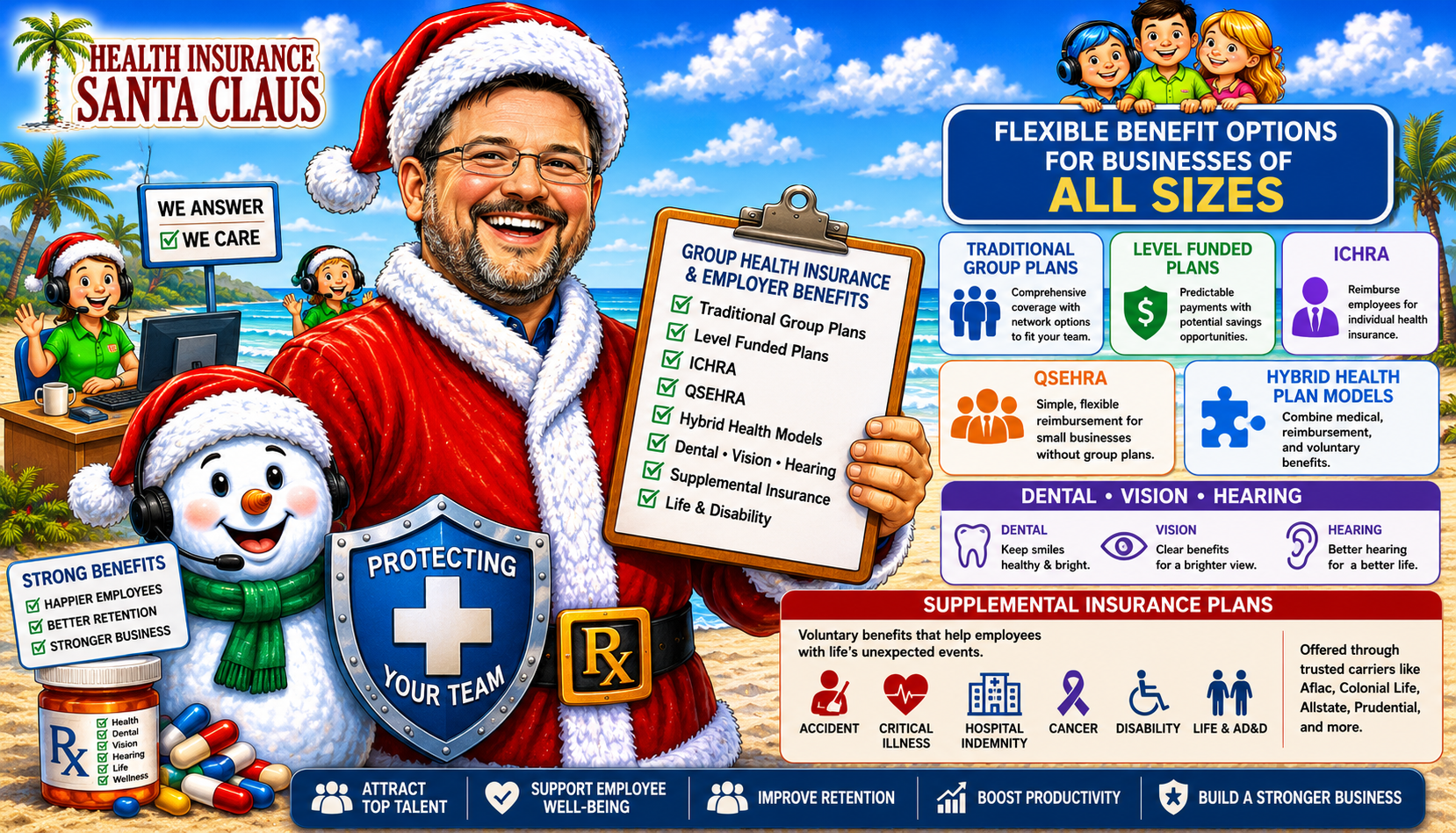
Group Health Insurance & Employer Benefits
Flexible Employee Benefits Designed for Today's Workforce
Providing quality employee benefits is one of the most effective ways to attract, retain, and support talented employees. Whether you're a small business with only a few employees or a growing company with a larger workforce, there are numerous employer-sponsored health insurance and benefit solutions available to fit your budget and business goals.
At Health Insurance Santa Claus, we help employers understand the many available options and build customized employee benefit packages that provide value for both the company and its employees. Because every business is different, we work with multiple insurance carriers to help identify solutions that align with your organization's needs.
Why Employee Benefits Matter
A competitive benefits package can help employers:
- Attract qualified employees
- Improve employee retention
- Increase workplace satisfaction
- Support employee health and wellness
- Reduce employee turnover
- Demonstrate commitment to employee well-being
- Offer valuable financial protection for employees and their families
Today's workforce expects more than just medical insurance. Many employees also value dental, vision, hearing, voluntary benefits, and flexible reimbursement arrangements.
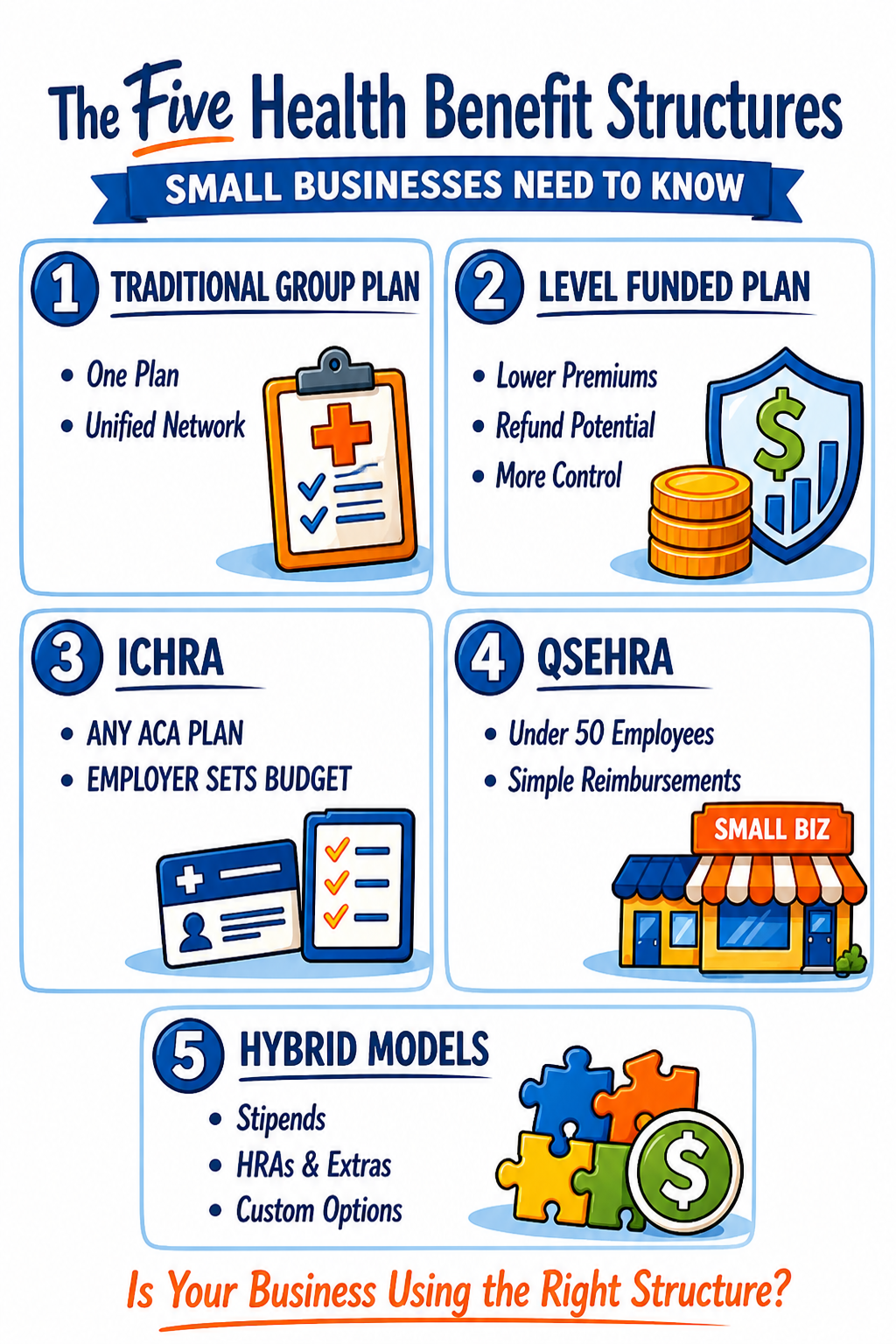
Traditional Group Health Insurance Plans
Traditional group health insurance remains one of the most common ways employers provide medical coverage to employees.
These plans typically allow employers to contribute toward employee premiums while offering access to comprehensive medical coverage through a network of healthcare providers.
Depending on the carrier and plan design, employers may have access to various network options, including:
- PPO Plans
- HMO Plans
- EPO Plans
- POS Plans
- High Deductible Health Plans (HDHPs)
- Health Savings Account (HSA) Compatible Plans
Traditional group plans can often be customized to meet the needs of businesses of various sizes and industries.
Level Funded Health Plans
Level funded health plans have become increasingly popular among many small and mid-sized employers looking for additional flexibility and potential cost savings.
These plans generally combine features of traditional fully insured coverage with characteristics commonly associated with self-funded arrangements.
Potential advantages may include:
- Predictable monthly payments
- Opportunity for savings if claims are lower than expected
- Comprehensive medical coverage
- Access to provider networks
- Claims administration services
- Potential year-end surplus opportunities depending on plan design
Level funded plans may not be appropriate for every employer, but they can provide another option when evaluating employee benefit strategies.
Individual Coverage Health Reimbursement Arrangement (ICHRA)
An Individual Coverage Health Reimbursement Arrangement (ICHRA) allows eligible employers to reimburse employees for qualifying individual health insurance premiums and eligible medical expenses under applicable federal rules.
Rather than offering one group medical plan to every employee, employers can establish reimbursement amounts that eligible employees may use toward qualifying individual health insurance coverage.
Potential benefits include:
- Budget flexibility
- Employer-controlled reimbursement amounts
- Employee plan choice
- Available to businesses of many sizes
- May work well for employers with diverse workforces or multiple locations
ICHRAs are subject to federal requirements and should be implemented according to applicable regulations.
Qualified Small Employer Health Reimbursement Arrangement (QSEHRA)
A Qualified Small Employer Health Reimbursement Arrangement (QSEHRA) is designed for certain small employers that do not offer a traditional group health plan.
Eligible employers may reimburse employees for qualifying medical expenses and health insurance premiums up to federally established annual limits.
Potential advantages include:
- Predictable employer budgeting
- Flexible reimbursement structure
- Employee choice of individual health coverage
- Tax advantages when applicable under federal law
- Simplified benefit administration for qualifying employers
Eligibility requirements and annual reimbursement limits are established under federal law and may change from year to year.
Hybrid Health Plan Models
Many employers are now exploring hybrid benefit strategies that combine multiple types of health benefits into one customized package.
Hybrid approaches may include combinations such as:
- Traditional group medical coverage with supplemental insurance
- Level funded plans paired with voluntary benefits
- ICHRA combined with dental and vision coverage
- QSEHRA alongside supplemental employee benefits
- Medical coverage with telehealth services
- Wellness and preventive care programs
- Health reimbursement arrangements with ancillary benefits
A hybrid strategy can help employers provide meaningful benefits while maintaining greater budget flexibility.
Dental, Vision & Hearing Benefits
Medical insurance is only one component of a comprehensive employee benefits package.
Many employers also choose to offer:
Group Dental Insurance
Dental coverage may help employees manage the cost of preventive and restorative dental services, including:
- Preventive cleanings
- Routine exams
- X-rays
- Fillings
- Crowns
- Root canals
- Oral surgery
- Orthodontic benefits on select plans
Offering dental insurance can encourage preventive care and contribute to overall employee health.
Group Vision Insurance
Vision benefits may include coverage for:
- Annual eye examinations
- Prescription eyeglasses
- Contact lenses
- Lens enhancements
- Frames
- Discounts on additional vision products
Routine vision care can help detect changes in eye health and support overall wellness.
Hearing Benefits
Some employer benefit programs may also include hearing-related benefits, which can help employees access:
- Hearing evaluations
- Hearing aid discounts
- Hearing aid benefits on eligible plans
- Follow-up hearing services
Available benefits vary by plan and carrier.
Supplemental Insurance Benefits
Many employers choose to strengthen their employee benefit package by offering voluntary supplemental insurance.
These plans are generally designed to help employees manage certain out-of-pocket expenses that may result from unexpected illnesses or accidents. Benefits vary by policy and carrier.
Common supplemental insurance options include:
Accident Insurance
Provides benefits for covered accidental injuries, which may help with expenses resulting from qualifying accidents.
Critical Illness Insurance
May provide a lump-sum cash benefit upon diagnosis of certain covered critical illnesses, subject to policy terms.
Hospital Indemnity Insurance
May pay fixed cash benefits for covered hospital admissions, inpatient stays, or other qualifying hospital-related services.
Cancer Insurance
Provides benefits for covered cancer-related expenses according to policy provisions.
Disability Insurance
May replace a portion of income if an employee becomes unable to work due to a covered illness or injury.
Life Insurance
Many employers offer:
- Group Term Life Insurance
- Voluntary Life Insurance
- Dependent Life Insurance
- Accidental Death & Dismemberment (AD&D) Insurance
Additional Voluntary Benefits
Depending on the carrier, employers may also offer:
- Wellness benefits
- Employee assistance resources
- Identity theft protection
- Legal services
- Pet insurance
- Financial wellness programs
Many nationally recognized insurance companies offer supplemental employee benefits, giving employers numerous options when designing a competitive benefits package.
Benefits for Small Businesses
Small businesses often assume they cannot afford employee benefits, but numerous options are available depending on company size, budget, and workforce needs.
Available solutions may include:
- Traditional Group Health Insurance
- Level Funded Plans
- ICHRA
- QSEHRA
- Hybrid Benefit Models
- Dental Insurance
- Vision Insurance
- Hearing Benefits
- Supplemental Insurance
- Life Insurance
- Disability Insurance
- Telehealth Options
Every employer's situation is unique, making it important to evaluate available options based on business objectives and employee needs.
Why Work With Health Insurance Santa Claus?
Choosing employee benefits can be complex, but you don't have to navigate the process alone.
Health Insurance Santa Claus works with businesses to help:
- Compare multiple insurance options
- Evaluate employer contribution strategies
- Review available benefit designs
- Explain reimbursement arrangements
- Build customized employee benefit packages
- Support annual benefit reviews
- Assist employees with enrollment questions
- Help businesses stay informed about available benefit options
Our goal is to simplify the employee benefits process so employers can make informed decisions with confidence.
Frequently Asked Questions
What is the difference between traditional group health insurance and level funded plans?
Traditional group health insurance generally provides fully insured coverage with fixed premiums, while level funded plans combine predictable monthly payments with features commonly associated with self-funded arrangements. The best option depends on your business size, employee demographics, budget, and overall benefit strategy.
Can small businesses offer health benefits?
Yes. Small businesses may have several options, including traditional group health insurance, level funded plans, ICHRA, QSEHRA, hybrid benefit models, and voluntary supplemental benefits, depending on eligibility requirements.
What is an ICHRA?
An Individual Coverage Health Reimbursement Arrangement (ICHRA) allows eligible employers to reimburse employees for qualifying individual health insurance premiums and certain eligible medical expenses under applicable federal rules.
What is a QSEHRA?
A Qualified Small Employer Health Reimbursement Arrangement (QSEHRA) is available to certain small employers that do not offer a traditional group health plan and allows reimbursement of qualifying medical expenses and health insurance premiums within federally established limits.
Should employers offer supplemental insurance?
Many employers choose to offer voluntary supplemental insurance because it can provide employees with additional financial protection while allowing them to customize their benefits based on individual needs.
Request a Group Health Insurance Consultation: Click Here!
Whether you're starting an employee benefits program for the first time or reviewing your current coverage, the Health Insurance Santa Claus can help you explore a wide range of employer-sponsored benefit options.
We work with businesses to compare traditional group health insurance, level funded plans, ICHRA, QSEHRA, hybrid health plan models, dental, vision, hearing, life insurance, disability insurance, and supplemental employee benefits.
Contact the Health Insurance Santa Claus today to discuss your business goals and discover employee benefit solutions designed to support your workforce while helping you manage costs.