



ACA vs. Short-Term Health Insurance
by The Health Insurance Santa Claus
Shopping for health insurance can feel overwhelming, especially when you’re trying to decide between an Affordable Care Act (ACA) Marketplace plan and a short-term health insurance plan.
At first glance, short-term plans often look attractive because they typically have lower monthly premiums. But lower premiums don’t always mean better protection.
Choosing the wrong type of coverage could leave you responsible for thousands of dollars in medical bills if you become sick or injured.
So how do you know which option is right for you?
In this guide, we’ll explain the differences between ACA Marketplace plans and short-term health insurance, discuss the advantages and disadvantages of each, and help you decide which type of coverage best fits your needs.
What Is an ACA Marketplace Health Insurance Plan?
ACA Marketplace plans are health insurance policies that comply with the Affordable Care Act (ACA). These plans are sold through the Health Insurance Marketplace and, in many states, directly through licensed insurance companies.
ACA-compliant plans must follow federal consumer protections, including:
- Coverage for essential health benefits
- Protection for people with pre-existing medical conditions
- No annual or lifetime dollar limits on essential health benefits
- Coverage for preventive services without cost-sharing when received from in-network providers
- Limits on annual out-of-pocket costs for covered, in-network care
Many individuals and families also qualify for premium tax credits and cost-sharing reductions based on income, making Marketplace coverage more affordable than many people expect. For official information about Marketplace coverage and financial assistance, visit HealthCare.gov.
What Is Short-Term Health Insurance?
Short-term health insurance, also called Short-Term Limited-Duration Insurance (STLDI), is designed to provide temporary medical coverage during gaps in insurance.
Examples include:
- Waiting for employer coverage to begin
- Transitioning between jobs
- Recently graduating from college
- Aging off a parent’s health insurance plan
- Waiting for another qualifying coverage option
Short-term plans generally have lower monthly premiums because they are not required to meet all ACA standards. As a result, they often exclude or limit certain benefits and may use medical underwriting.
Federal rules governing the maximum duration of short-term plans have changed over time, and some states prohibit or further restrict them. Always verify the current rules that apply in your state.
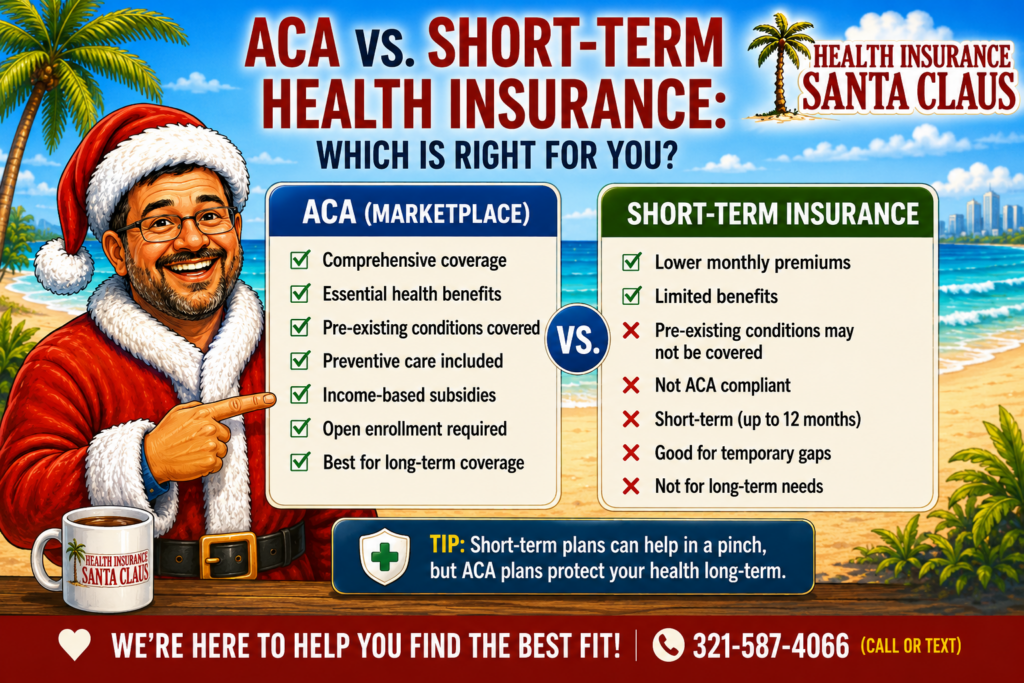
ACA vs. Short-Term Insurance at a Glance
ACA Marketplace Plans
✔ Comprehensive coverage
✔ Covers pre-existing conditions
✔ Preventive care included
✔ Essential health benefits
✔ Financial assistance may be available
✔ Guaranteed issue during eligible enrollment periods
✔ Annual out-of-pocket maximums for covered, in-network care
Short-Term Plans
✔ Often lower monthly premiums
✔ Quick approval in many cases
✔ Flexible temporary option in states where available
✘ May exclude pre-existing conditions
✘ May not cover all essential health benefits
✘ Not ACA-compliant
✘ Intended for temporary situations—not long-term protection
The Biggest Difference: Pre-Existing Conditions
One of the most significant differences between these two types of coverage is how they handle pre-existing conditions.
ACA Plans
ACA-compliant plans cannot deny coverage or charge higher premiums because of a pre-existing medical condition.
Examples include:
- Diabetes
- Cancer
- Heart disease
- Asthma
- High blood pressure
- Pregnancy (covered according to plan benefits)
This protection is one of the cornerstone consumer safeguards of the Affordable Care Act.
Short-Term Plans
Many short-term plans may decline coverage, exclude treatment related to pre-existing conditions, or use medical underwriting. Coverage varies by carrier and state, so it’s important to read the policy carefully before enrolling.
Essential Health Benefits
ACA Marketplace plans must cover ten categories of essential health benefits, including:
- Emergency services
- Hospitalization
- Pregnancy, maternity, and newborn care
- Mental health and substance use disorder services
- Prescription drugs
- Rehabilitative services
- Laboratory services
- Preventive and wellness services
- Pediatric services, including dental and vision for children
- Ambulatory patient services
Short-term plans are not required to include all of these benefits. Coverage can differ substantially from one policy to another.
Comparing Costs
Many shoppers focus only on the monthly premium.
While premium is important, it isn’t the only cost you should evaluate.
When comparing plans, consider:
- Monthly premium
- Deductible
- Copays
- Coinsurance
- Out-of-pocket maximum
- Provider network
- Prescription drug coverage
- Coverage limitations and exclusions
A plan with a lower premium may expose you to higher costs if you need significant medical care.
Real-Life Example
Imagine two healthy 30-year-olds.
Person A enrolls in an ACA Marketplace Silver plan.
- Monthly premium: $360 (before any applicable subsidies)
- Deductible: $2,500
- Comprehensive benefits
- Preventive care covered
- Out-of-pocket maximum
Person B enrolls in a short-term plan.
- Monthly premium: $145
- Higher cost-sharing
- Limited benefits
- Pre-existing condition exclusions may apply
- Coverage limitations vary
If both remain healthy all year, Person B may spend less.
However, if both are diagnosed with a serious illness or need surgery, the ACA plan generally provides broader financial protection, subject to its deductible, cost-sharing, and out-of-pocket maximum.
When a Short-Term Plan May Make Sense
A short-term policy may be appropriate in limited circumstances, such as:
- Between jobs
- Waiting for employer benefits
- Missed Marketplace Open Enrollment and don’t qualify for a Special Enrollment Period
- Need temporary coverage while transitioning to another plan
- Want limited protection for unexpected illnesses or injuries during a brief gap
These plans are intended to bridge temporary coverage gaps—not replace comprehensive health insurance.
When an ACA Plan Is Usually the Better Choice
ACA Marketplace coverage is often the stronger option if you:
- Have ongoing medical conditions
- Take regular prescription medications
- Want preventive care included
- Expect specialist visits
- Are planning surgery
- Want maternity coverage
- Prefer long-term, comprehensive coverage
- Qualify for financial assistance through the Marketplace
Many consumers are surprised to learn they qualify for premium tax credits that significantly reduce their monthly costs.
Common Misconceptions
“Short-Term Insurance Is Always Cheaper”
The monthly premium may be lower, but total costs depend on your healthcare needs and the policy’s limitations.
“ACA Plans Are Too Expensive”
Many people qualify for subsidies that lower their monthly premium. It’s worth checking your eligibility before assuming Marketplace coverage is unaffordable.
“I’m Healthy, So I Don’t Need Comprehensive Coverage”
Good health today doesn’t guarantee good health tomorrow. Accidents and unexpected illnesses can happen to anyone.
Questions to Ask Before You Enroll
Before choosing any health insurance plan, ask yourself:
- How long do I need coverage?
- Do I have any pre-existing medical conditions?
- Am I eligible for ACA financial assistance?
- Do I need prescription drug coverage?
- Do I want preventive care included?
- Are my doctors in the plan’s network?
- What is my deductible?
- What is my out-of-pocket maximum?
- What services are excluded?
These questions can help you choose coverage that fits your medical needs and your budget.
Trusted Government Resources
For official information about ACA Marketplace plans, financial assistance, and consumer protections, review these resources:
- HealthCare.gov – Marketplace Coverage
- HealthCare.gov – Compare Health Plans
- HealthCare.gov – Essential Health Benefits
- Centers for Medicare & Medicaid Services (CMS)
- U.S. Department of Health & Human Services (HHS)
Continue Your Health Insurance Education
Understanding the differences between ACA Marketplace plans and short-term insurance is just one step toward choosing the right coverage. We also recommend learning about:
- Deductibles vs. Copays vs. Coinsurance
- HMO vs. PPO vs. EPO Networks
- How Premium Tax Credits Work
- What Is an Out-of-Pocket Maximum?
- Health Insurance Terms A–Z
Exploring these topics will help you compare plans with confidence and avoid costly surprises.
Final Thoughts
There is no one-size-fits-all answer when it comes to health insurance.
If you need temporary coverage and understand the limitations, a short-term plan may be appropriate in certain situations where it’s available.
If you’re looking for comprehensive, long-term protection, especially if you have ongoing healthcare needs or qualify for financial assistance, an ACA Marketplace plan is often the better choice.
At Health Insurance Santa Claus, we believe informed consumers make better decisions. Our goal is to explain health insurance in plain English so you can choose coverage that fits your health, your budget, and your future.
Whether you’re shopping for an ACA Marketplace plan, exploring short-term options where available, comparing Medicare plans, or reviewing employer coverage, we’re here to help.
Call or Text: 321-587-4066
Visit: HealthInsuranceSantaClaus.com
“Helping families understand health insurance—one policy at a time.”